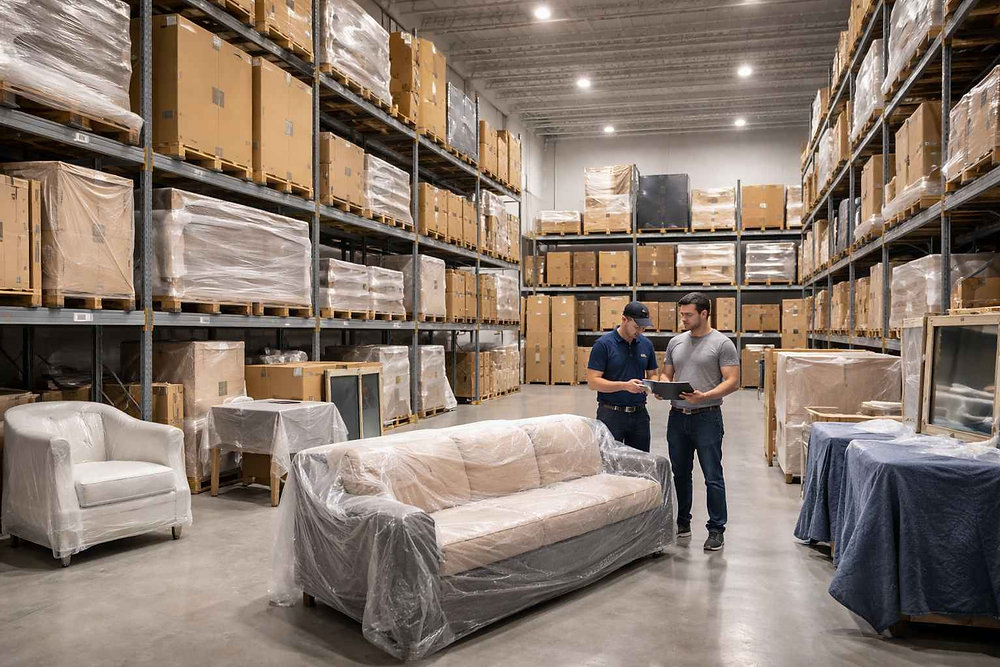

Receiving Warehouse & Storage for Organized Furniture Logistics

Managing furniture deliveries for an interior design, renovation, hospitality, or commercial project can quickly become complicated. Products may arrive from several manufacturers, showrooms, and custom suppliers, often on completely different schedules. Some pieces may be delivered weeks before a property is ready, while others may require careful inspection, secure handling, or professional installation.

A professional Receiving Warehouse & Storage service provides one coordinated location where furniture, artwork, lighting, rugs, décor, and other valuable items can be received, inspected, documented, organized, and stored until the final delivery date.

For designers and project managers working in New York City, this service can simplify logistics, reduce delays, and protect expensive furnishings throughout the entire project.

What Is a Furniture Receiving Warehouse?

A furniture receiving warehouse acts as a central destination for products arriving from multiple vendors. Instead of sending every shipment directly to a client’s home, construction site, hotel, office, or apartment building, suppliers deliver the items to a professionally managed warehouse.

The receiving team checks in each shipment, records the delivered items, and inspects them for visible signs of damage. Depending on the selected service, photographs may also be taken to document the condition of the furniture when it arrives.

After receiving and inspection, the products are placed into secure storage. They remain there until the renovation is complete, the building is ready, and the designer schedules the final installation.

This makes Receiving Warehouse & Storage especially valuable for projects involving many suppliers, custom pieces, or strict building delivery requirements.

Why Direct-to-Site Deliveries Can Create Problems

Sending furniture directly to a project location may appear convenient, but it often creates unnecessary complications. Renovations may still be underway, elevators may not be reserved, loading areas may be unavailable, or contractors may still be working inside the property.

Furniture delivered too early can be exposed to dust, paint, construction equipment, moisture, or accidental damage. Large boxes may also take up valuable working space and make it more difficult for contractors to complete their work.

New York City buildings can add another layer of complexity. Many properties require scheduled delivery windows, certificates of insurance, service elevator reservations, and advance coordination with building management.

By using Receiving Warehouse & Storage, designers can avoid repeated deliveries to the property and schedule one organized installation after the space is fully prepared.

Receiving, Inspection, and Documentation

Professional receiving involves more than simply accepting a package. Each delivery should be checked against the available shipment information and assigned to the correct project.

The warehouse team may document details such as the vendor, project name, item type, quantity, delivery date, and intended room. Packaging can be examined for obvious damage, and the visible condition of each item can be reviewed.

Early inspection is important because shipping damage may need to be reported within a limited period. Discovering a cracked table, broken lamp, damaged cabinet, or stained upholstery several weeks later can make resolving the problem much more difficult.

With an organized Receiving Warehouse & Storage process, designers gain better visibility into what has arrived, what remains outstanding, and which pieces may require attention before installation day.

Secure Storage Until the Project Is Ready

Furniture rarely arrives in the exact order in which it will be installed. A custom sofa may be completed early, while lighting fixtures, artwork, and dining furniture may arrive several weeks later.

Secure storage allows the project team to collect all items gradually without placing them inside an unfinished property. Products can be organized by client, room, delivery phase, or installation sequence.

Both short-term and longer-term storage can be useful. A small residential project may only require storage for several weeks, while a large renovation, model apartment, restaurant, hotel, or commercial development may need warehouse support for several months.

The objective is not simply to store furniture. It is to maintain an organized inventory so that the correct products can be prepared efficiently when the final delivery is scheduled.

Consolidated White Glove Delivery

One of the greatest advantages of Receiving Warehouse & Storage is the ability to consolidate multiple vendor shipments into a single coordinated delivery.

Once the property is ready, the warehouse team can prepare the items, load them in the correct sequence, and transport them to the project location. A white glove delivery crew can then place furniture in the intended rooms, complete light assembly, protect floors and walls, and remove packaging materials.

Consolidated delivery reduces the number of appointments that designers must manage. It also minimizes disruption for homeowners, building staff, contractors, and neighbors.

Instead of coordinating ten different vendors over several weeks, the designer can oversee one carefully planned installation day.

Who Benefits From Receiving and Storage Services?

These services are commonly used by interior designers, decorators, architects, furniture showrooms, real estate developers, hospitality designers, and commercial project managers.

They are particularly helpful for:

• Luxury residential installations
• Apartment and condominium renovations
• Hotel and restaurant furnishing projects
• Model apartments and staged properties
• Office redesigns and commercial interiors
• Custom furniture orders
• Projects involving artwork, mirrors, rugs, or lighting
• Properties with restricted delivery schedules

Even smaller projects can benefit when several suppliers are involved or when the client’s property is not immediately available.

Better Coordination for Interior Designers

Interior designers need to focus on creative decisions, client communication, sourcing, and installation quality. Constantly tracking delivery drivers, inspecting packaging, finding temporary storage, and arranging building access can take time away from those responsibilities.

A reliable warehouse partner becomes an extension of the designer’s project team. Clear communication between the designer and the warehouse helps ensure that products are properly received, stored, staged, and delivered according to the design plan.

Divine Moving and Storage provides furniture receiving, storage, white glove delivery, and installation support for design projects throughout New York City and surrounding areas. Shipments from manufacturers, showrooms, décor suppliers, lighting companies, and custom fabricators can be directed to one professional receiving location.

Plan a Smoother Installation

Successful installations depend on preparation. Before choosing a service, designers should provide information about expected deliveries, project timelines, unusual item dimensions, fragile pieces, access restrictions, and installation requirements.

It is also important to confirm how incoming items will be documented, how damage will be reported, and how storage charges are calculated. Clear expectations help prevent misunderstandings and allow the warehouse team to prepare for each stage of the project.

Professional Receiving Warehouse & Storage gives designers greater control over complicated furniture logistics. By consolidating shipments, protecting valuable items, documenting deliveries, and coordinating final installation, the service transforms a collection of separate vendor orders into one organized project.

The result is a cleaner job site, fewer delivery complications, better protection for furnishings, and a more efficient final reveal for both the designer and the client.